

 See My Latest Article on HelloNation
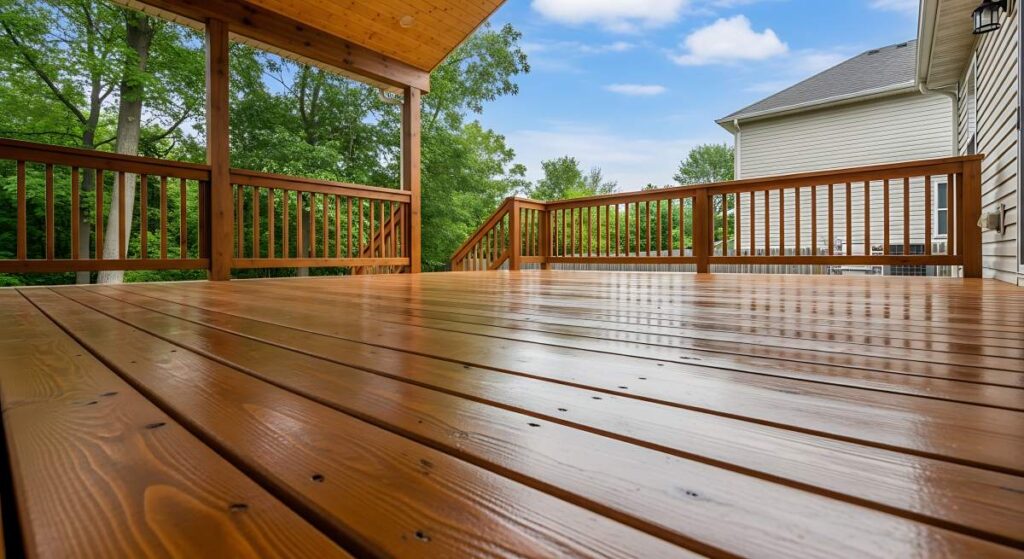
Renovating a deck is more than replacing worn boards. The material selected for the surface, framing, railings, stairs, and fasteners affects appearance, maintenance, heat retention, drainage, safety, and long-term cost. For homeowners in Knoxville, TN, the best choice usually depends on how much moisture and upkeep the deck can tolerate, how much afternoon sun it receives, and how the existing structure is performing.
What should be evaluated before choosing new deck materials?
Start with the condition of the entire deck, not just the walking surface. A deck can have boards that look weathered while the framing beneath remains sound, but surface replacement alone is not appropriate if structural components have deteriorated.
Check for:
- Soft or crumbling wood near posts, joists, stairs, and ledger connections
- Rusted, loose, or missing fasteners
- Water collecting against the house
- Wobbly railings or stairs
- Sagging areas or uneven settlement
- Splitting, twisting, or excessive movement in the framing
- Evidence of insect damage or long-term moisture exposure
The material decision should follow this inspection. Replacing surface boards over damaged framing may create an attractive deck that still has safety problems. If structural deterioration, unsafe stairs, or questionable attachment to the house is present, a qualified inspection is appropriate before renovation work begins.
Is pressure-treated wood still a practical choice?
Yes. Pressure-treated lumber remains a common option because it is widely available, adaptable to many designs, and generally less expensive at the beginning than composite decking or hardwood.
Its main advantages include:
- Lower initial material cost
- Easy cutting and installation
- Straightforward repairs or board replacement
- A familiar appearance that can be stained in different colors
- Compatibility with traditional wood framing
The tradeoff is maintenance. Pressure-treated wood typically needs cleaning and periodic water-repellent protection or staining. In a climate with humid summers, heavy rain, and changing temperatures, unfinished boards can absorb moisture, gray, split, or develop surface checking over time.
Wood quality also matters. Deck boards should be selected carefully for straightness, moisture content, knots, and visible defects. The best-looking board is not always the most durable if it is installed where water cannot drain or dry effectively.
What are the advantages and drawbacks of composite decking?
Composite decking is made from a mixture of materials, commonly including wood fibers and plastic. It is often selected for its consistent appearance and reduced routine maintenance compared with wood.
Composite boards can offer:
- No regular staining or sealing
- Consistent color and texture
- Resistance to common surface problems such as splinters
- Simple cleaning with appropriate methods
- A wide range of colors and grain patterns
However, composite decking is not maintenance-free. It still needs periodic cleaning, and organic debris left between boards can hold moisture against the surface. Darker colors may become hot in direct summer sunlight, especially on decks with little shade. Some boards may also show scratches, fading, or expansion at joints over time.
Composite products differ significantly in surface texture, warranty terms, heat retention, span requirements, and installation details. Comparing the specific product specifications is more useful than treating all composite decking as the same material.
Is PVC decking different from composite decking?
Yes. PVC decking is made primarily from plastic, while composite decking usually contains a blend of plastic and wood fibers. PVC boards are often lighter and highly resistant to moisture, but they can have a more synthetic appearance depending on the design.
PVC may be useful where:
- The deck is exposed to frequent rain
- Low moisture absorption is a priority
- The area is near landscaping that stays damp
- A lightweight decking product is helpful for the design
Like composite materials, PVC can become hot in strong sun. Its appearance, stiffness, surface texture, and movement with temperature changes vary by product. Installation must allow for manufacturer-specified spacing and expansion.
Which deck material handles Knoxville’s weather best?
No material eliminates weather-related concerns. The most durable deck is usually one that allows water to drain, has adequate airflow, and is maintained according to its material requirements.
Local conditions that influence material performance include:
- Humid summers that slow drying
- Heavy rain and storm runoff
- Freeze-and-thaw cycles during colder weather
- Leaf litter and organic debris
- Sloped lots that can create drainage challenges
- Sun exposure that causes fading and surface heating
A shaded deck may benefit from materials that resist moisture retention and mildew staining. A sunny deck may be more comfortable with a lighter color or a design that provides shade. Deck boards should not be selected separately from the drainage plan, roof runoff, landscaping, and spacing between boards.
What should be used for the frame?
The frame is typically built from pressure-treated structural lumber or another material specifically rated for structural use. Decking boards are not automatically suitable for beams, joists, posts, or ledger components.
Framing material should be selected based on:
- Ground contact or above-ground exposure
- Moisture conditions
- Required spans and loads
- Fastener compatibility
- Ventilation and drainage
- The condition of existing posts and connections
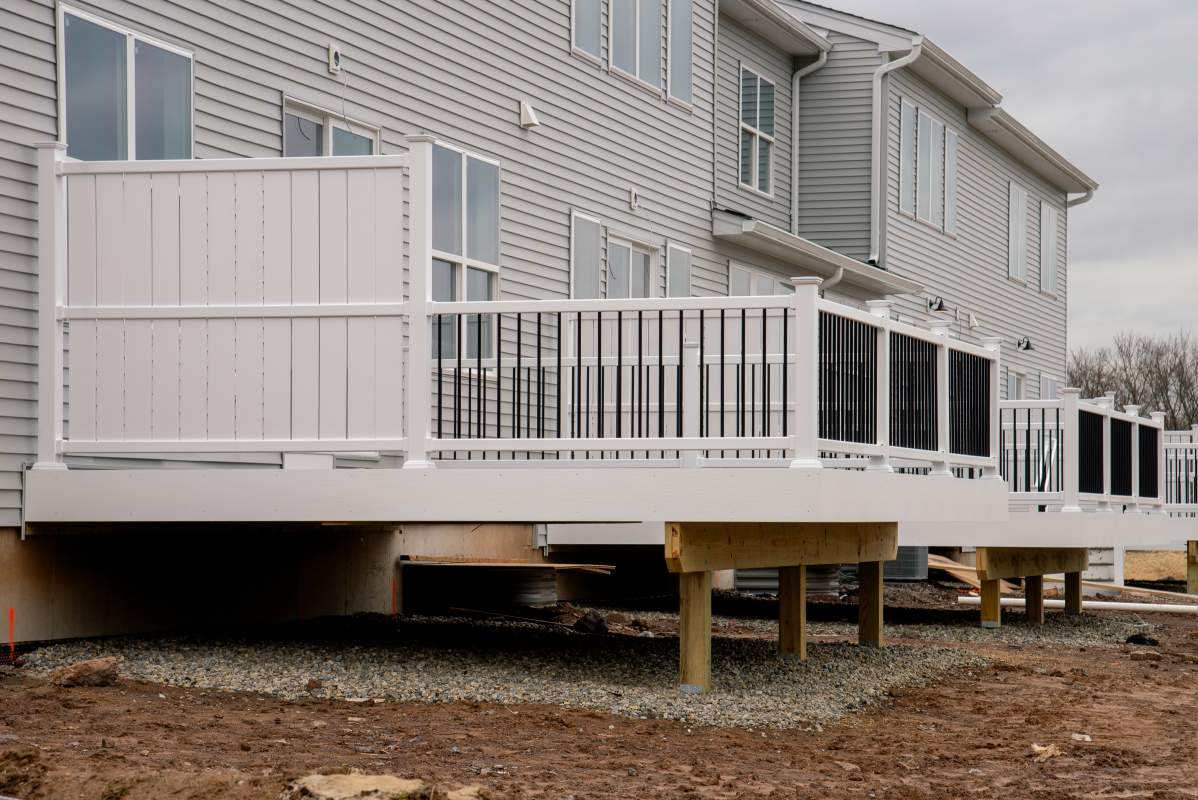
A common misconception is that long-lasting surface boards compensate for an older or undersized frame. They do not. Structural framing must be capable of supporting the deck, railings, stairs, furniture, and expected use.
How do railings and stairs affect material selection?
Railings and stairs receive more contact and wear than many homeowners expect. Stair nosings, handrails, and railing caps are frequently touched, exposed to water, and subject to movement.
For stairs, consider:
- Slip resistance when wet
- Visibility of the step edges
- Comfortable rise and tread dimensions
- Drainage and snow or ice removal
- Resistance to splitting at fasteners
Wood railings can be stained to match the deck but need regular maintenance. Composite and PVC railings may reduce upkeep, although their connection systems and temperature movement must be considered. Metal railing components can provide a clean appearance, but coatings, fasteners, and contact with dissimilar metals should be evaluated to reduce corrosion.
How should appearance, comfort, and cost be balanced?
Initial price is only one part of the decision. A less expensive material may require more cleaning, staining, repairs, and board replacement. A higher-priced product may reduce some maintenance but still require careful installation and periodic cleaning.
Consider the deck’s expected use:
- Barefoot family areas may benefit from a smooth, splinter-resistant surface.
- Dining areas may need enough room for furniture movement and easy cleanup.
- A deck under trees may require frequent removal of leaves and debris.
- A sunny upper-level deck may be more comfortable in a lighter color.
- A rarely used secondary deck may not justify the highest-cost material.
Color should also be chosen with future maintenance in mind. Dark finishes can make fading more noticeable and may absorb more heat. Very light finishes can show mud, pollen, and organic staining more clearly.
What fasteners and installation details matter?
Fasteners should be compatible with the decking, framing treatment, and exposure conditions. Ordinary interior screws are not appropriate for an exterior deck. Corrosion-resistant fasteners are especially important where treated lumber, moisture, and changing temperatures are present.
Other details that affect durability include:
- Proper board spacing for drainage and movement
- Sealed or protected cut ends where required
- Adequate flashing at the house connection
- Separation between wood and soil
- Airflow beneath the deck
- Correct stair and railing attachment
- Drainage that does not direct water toward the foundation
A material can perform poorly if it is installed without room to expand, installed too tightly for drainage, or placed in constant contact with wet soil.
What is the most sensible choice for a renovation?
For many households, the decision comes down to maintenance preference, budget, appearance, and exposure. Pressure-treated wood offers flexibility and lower initial cost but requires more upkeep. Composite and PVC materials can reduce staining and sealing, but they cost more and may become hot in direct sun. Hardwood can provide a distinctive appearance but may require specialized fastening and maintenance.
The most reliable renovation plan matches the material to the site. Examine the framing first, identify water and sun patterns, compare long-term care requirements, and review the installation specifications for every material used. A deck that dries efficiently and is maintained consistently will generally outlast one built from more expensive products without attention to drainage, connections, and routine care.