

 See My Latest Article on HelloNation
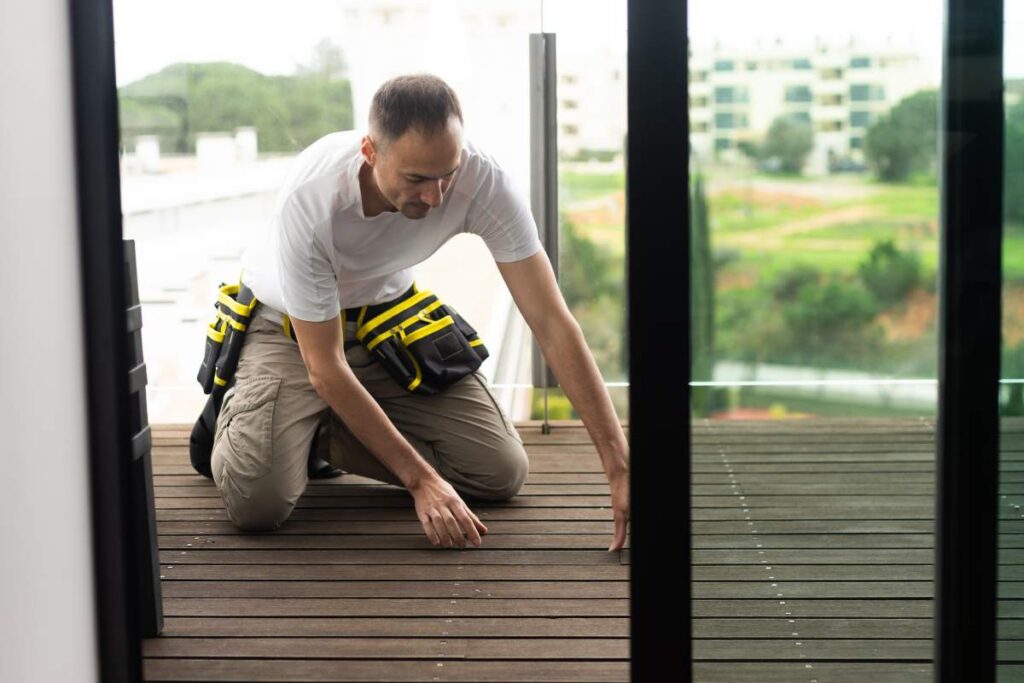
A deck can look serviceable while important structural components are weakening underneath. In Knoxville, TN, repeated rain, humidity, temperature changes, and occasional severe storms can accelerate deterioration in wood, fasteners, footings, and connections.
Not every cracked board means a deck is unsafe. Structural concerns are more serious when movement, sagging, rot, separation, or water-related damage affects the frame that supports people and outdoor furnishings.
How can you tell whether a deck has a structural problem?
The clearest warning signs are unusual movement, visible sagging, deteriorated support members, loose connections, and damage where the deck attaches to the house. These conditions deserve closer inspection before the deck is used heavily.
Walk across the deck slowly and pay attention to how it feels. A solid deck may flex slightly, but it should not bounce excessively, shift from side to side, or produce movement that seems concentrated in one area.
Look at the deck from several angles, including from the yard. A level deck surface that appears to dip, tilt, or sag may have problems with beams, posts, joists, footings, or the connection at the house.
Other signs include:
- A railing that moves when pushed
- Stairs that shift, separate, or feel uneven
- Gaps developing between the deck and the house
- Nails or screws backing out repeatedly
- Cracked or split support posts
- Water collecting in areas that previously drained
- Deck boards that feel soft underfoot
- Beams or joists that are visibly bowed or twisted
Why is movement more concerning than ordinary aging?
Surface aging is usually cosmetic, while movement can indicate that the load path is no longer working as intended. A deck transfers weight from the boards to the joists, beams, posts, footings, and supporting ground. Weakness at any major connection can affect the stability of the entire structure.
A small amount of normal flex may occur in a wood deck. However, sudden movement, worsening movement, or movement that is noticeable near a ledger, beam, stair connection, or guardrail should not be ignored.
A useful observation is whether the movement occurs only when one person walks across the deck or whether several parts move together. Widespread movement may suggest problems with bracing, posts, footings, or the deck’s attachment. Localized movement may point to a damaged joist, loose fastener, deteriorated stair stringer, or failing railing connection.
What does rot look like in deck framing?
Rot often begins where wood stays damp or where water cannot drain. The ends of joists, beam-to-post connections, ledger areas, stair stringers, and post bases are common places for deterioration.
Paint or stain can hide surface damage, so visual inspection should be combined with gentle probing using a screwdriver or similar tool. Sound wood resists light pressure. Decayed wood may feel soft, crumbly, fibrous, or hollow.
Pay particular attention to:
- Wood that remains dark or damp long after rainfall
- Fungal growth or a musty odor
- Long cracks near bolts, nails, or notches
- Rot around post bases
- Joist ends that appear thinner than the rest of the member
- Splits that extend deeply through a beam or post
A small amount of surface checking—shallow cracks that develop as lumber dries—is common. Checking becomes more concerning when cracks are deep, run through a major support member, or allow water to collect around a connection.
Could the deck’s attachment to the house be unsafe?
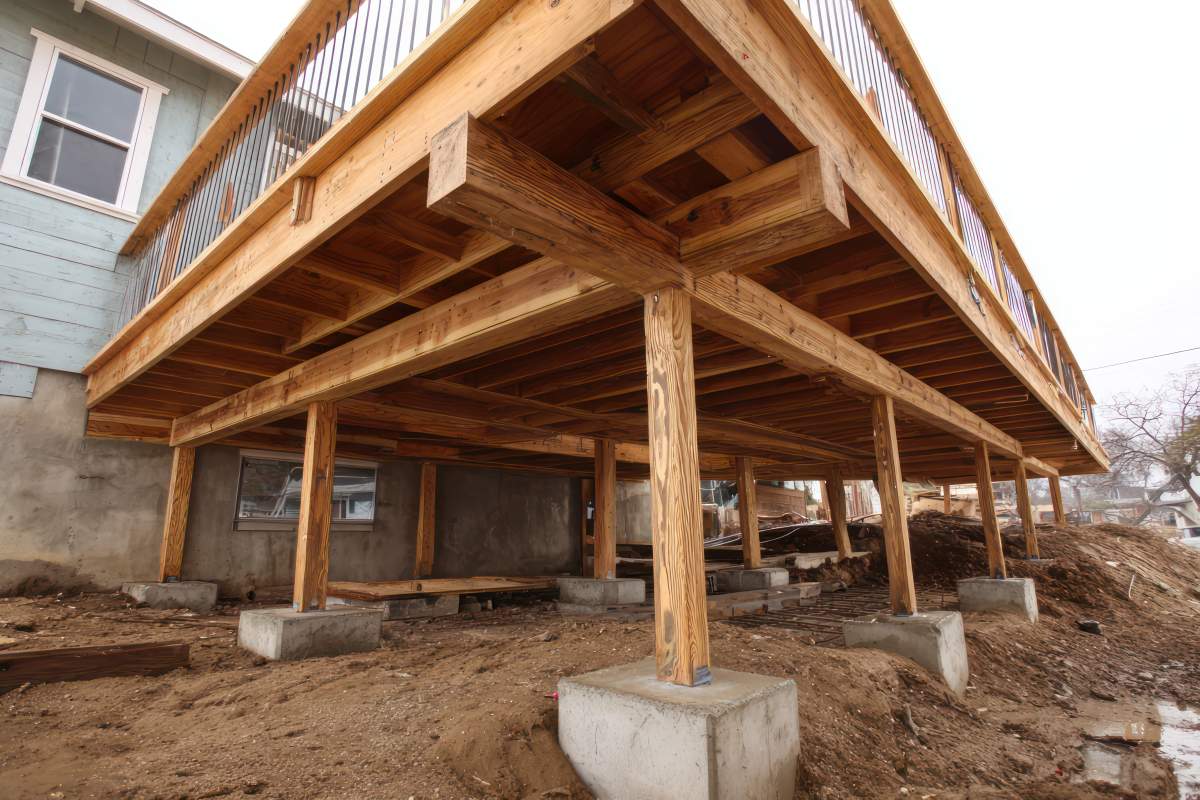
Yes. The connection between a deck and the house is one of the most important areas to inspect. A deck ledger—the board secured to the house that supports one end of the deck—must be firmly attached and protected from water intrusion.
Warning signs include a visible gap between the ledger and the house, missing or corroded fasteners, crushed or split wood, staining below the connection, or flashing that appears absent or damaged. Movement at the ledger can become dangerous because it may affect the entire deck at once.
Decks that were attached over siding, improperly flashed, or secured with inadequate fasteners may be more vulnerable to moisture damage and separation. Older construction methods may also differ from current practices, so age alone does not determine safety, but older decks deserve careful attention to their connections.
What do damaged posts, beams, and footings indicate?
Posts and beams carry the deck’s main loads. A damaged post may lean, split, sink, or pull away from its connection. A beam may sag between posts, show deep splitting, or have fasteners that no longer hold tightly.
The area around the footing also matters. A post that appears to be sinking can indicate soil movement, drainage problems, an undersized base, or deterioration where wood meets concrete or metal.
In a community with wet seasons, clay-rich or disturbed soil can change in firmness over time. Poor drainage near a footing may contribute to settlement or prolonged moisture exposure. A deck does not necessarily need to be perfectly level, but a new or worsening tilt should be investigated.
Do not assume that adding a temporary block, extra screw, or decorative post will restore structural capacity. Repairs need to address the reason the movement or deterioration occurred.
Are stairs and railings structural concerns?
They can be. Stairs and guardrails are among the most frequently used parts of a deck, and failures can cause serious falls even when the main platform remains stable.
Check whether stair stringers are cracked, separated, or supported unevenly. Treads should not rock, and the stair assembly should not pull away from the deck. The top and bottom of the stairs deserve equal attention because movement at either end can affect the entire run.
Railings should remain firmly connected to the deck framing, not just to thin surface boards. A railing that wobbles, leans, or pulls away under modest pressure may have a failed connection or deteriorated supporting wood.
Loose balusters, damaged posts, and wide openings can also create safety concerns for children and pets. Guard and stair requirements depend on factors such as deck height and local rules, so an older deck may not match current standards even if it has not visibly failed.
What should residents do if a deck shows serious warning signs?
Limit use immediately if the deck has severe sagging, substantial rot, a visibly separated ledger, a collapsing stair section, unstable railings, or movement that feels sudden or extensive. Keep people away from areas that appear unsupported.
Photographs can help document changes over time, especially if taken from the same locations. It is useful to record where movement occurs, whether it worsens after rain, and whether doors, stairs, or railings have changed position.
Structural questions involving the ledger, beams, posts, footings, stairs, or guardrails may require evaluation by a qualified building professional. This is especially true when repairs would involve temporarily supporting the deck, replacing major framing, altering the house connection, or determining whether the structure complies with applicable safety requirements.
Routine cleaning and sealing can extend the life of exposed wood, but coatings do not correct undersized framing, poor drainage, missing flashing, inadequate connections, or settled footings. Structural improvements should address the underlying cause rather than only covering visible damage.
How often should a deck be checked?
A practical inspection schedule is at least once each year, plus another review after unusually heavy rain, severe wind, or a major freeze-and-thaw period. Spring is often useful because winter moisture and temperature changes may reveal loose connections, settlement, or cracking.
Inspect from above, below, and along the house connection. Look at posts and footings from ground level, check the underside for rot and missing fasteners, and walk the deck carefully for changes in stability.
Early attention does not always mean major reconstruction. A timely repair may involve replacing a damaged connector, improving drainage, correcting flashing, reinforcing a beam, or addressing a localized area of rot. Waiting until movement becomes obvious can allow a limited defect to affect several connected components.